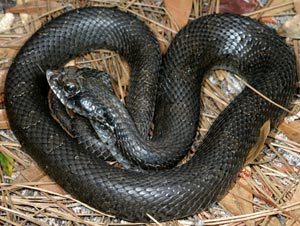
Adults average 71 cm (28 inches) in length, with females being larger than males. The most distinguishing feature is the upturned snout, used for digging in sandy soils.
The color pattern is extremely variable. It color can be red, green, orange, brown, grey to black, or any combination therein depending on locality. They can be blotched, checkered, or patternless. The belly tends to be a solid grey, yellow or cream colored.
These snakes are considered rear-fanged, but any venom they excrete is not considered dangerous to humans and they are not inclined to bite.
Conservation status
This species is classified as Least Concern (LC) on the IUCN Red List of Threatened Species (v3.1, 2001).[4] Species are listed as such due to their wide distribution, presumed large population, or because it is unlikely to be declining fast enough to qualify for listing in a more threatened category. The population trend is stable. Year assessed: 2007Behavior
When threatened, the neck is flattened and the head is raised off the ground, not unlike a cobra. They also hiss and sometimes feign strikes, but are not apt to bite. If this threat display does not work to deter a would-be predator, hognose snakes will often roll onto their back and play dead, going so far as to emit a foul musk from their cloaca and let their tongue hang out of their mouth. If they are rolled upright while in this state, they will often roll back as if insisting they are really dead.Feeding
The eastern hognose snake specializes in feeding on toads, having an immunity to the toxins toads secrete. They will also consume other amphibians, like frogs and salamanders.Captivity
Eastern hognose snakes are frequently available in the exotic pet trade, but due to their difficult dietary requirements they can be a challenge for some keepers. Evidence has shown that eastern hognose snakes fed a diet which includes rodents tend to develop liver problems, and may have a reduced lifespan.[1] In Canada, eastern hognose snakes are considered to be a species-at-risk (COSEWIC designation: Threatened), and consequently capture or harassment of these animals, including their captive trade, is illegal.These snakes live for approximately 12 years. They shed their skin periodically to grow and develop. The females, which lay 10-30 eggs at a time, do not take care of the young. The eggs hatch after about 60 days.

No comments:
Post a Comment